What Is a 200A to 400A Service Upgrade?
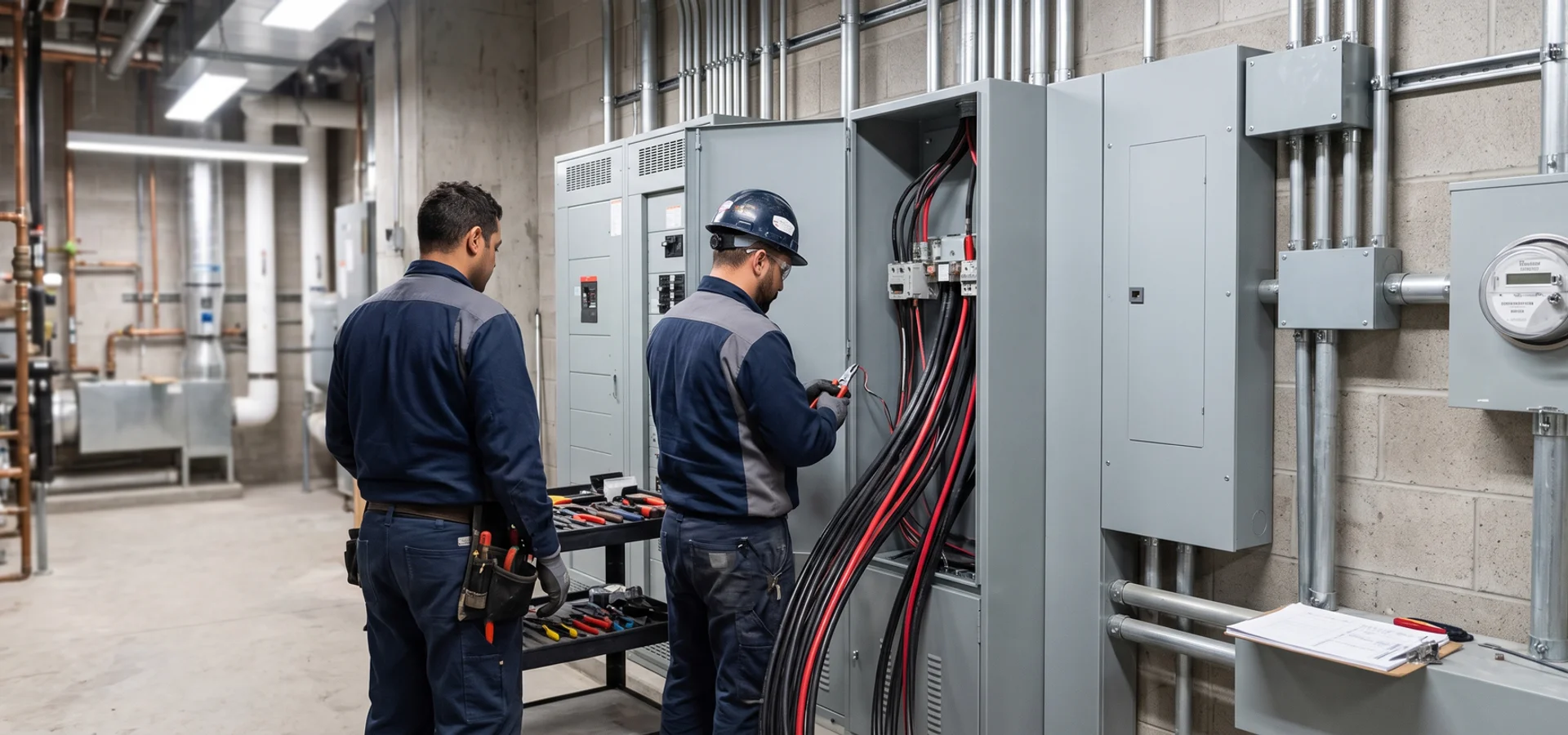
A 200A to 400A service upgrade doubles the continuous capacity of a commercial or large-residential service. Practically it means new service entrance conductors, a CT cabinet for utility metering, either commercial switchgear or a 400A main with distribution panels downstream, and a coordinated cutover so the property is not without power longer than planned.
It is a different animal from a residential panel upgrade in three ways. First, metering: above roughly 200A the utility meters through current transformers, so a CT cabinet enters the design and the utility specifies its type and position. Second, plan review: the Electrical Safety Authority reviews the design against the Ontario Electrical Safety Code (OESC) before installation, which means a single-line diagram, a load study and a short-circuit current rating check. Third, continuity: a business cannot simply lose power for a day, so the cutover is planned, phased or moved after hours.
The trigger is almost always added load. Commercial HVAC, a kitchen fit-out, refrigeration, tenant improvements, or EV charging for a fleet or staff parking. Sometimes it is a landlord upgrading base-building capacity before leasing.
For the commercial range, see commercial electrical panel upgrades.
Configuration Options
- 400A single-phase with CT cabinet. Suits large residential, small retail and light commercial where three-phase is unavailable or unnecessary.
- 400A three-phase 120/208V. The standard commercial arrangement where three-phase supply exists. Better for motor and kitchen loads.
- 400A with commercial switchgear. Bolt-on breaker switchgear with distribution downstream, for multi-tenant or multi-panel properties.
- 400A feeding twin 200A panels. Common on very large homes where the demand calculation exceeds a single 200A service.
When a 400A Service Becomes Necessary
- Commercial HVAC is being added or replaced. Rooftop units and larger air handlers are the most common single driver.
- A commercial kitchen is going in. Three-phase appliance loads add up fast. See restaurant electrical upgrades.
- Tenant improvements exceed base-building capacity. A landlord’s 200A service was never sized for today’s tenant loads. See retail electrical upgrades.
- Refrigeration or process equipment. Continuous motor loads that consume calculated capacity disproportionately.
- Fleet or staff EV charging. Several Level 2 chargers, or any DC fast charging, is a 400A conversation minimum.
- A very large home. Two chargers, a pool, electric heating and a secondary kitchen can exceed 200A on the calculation.
What Drives the Cost Between $5,000 and $15,000
Phase configuration is the biggest factor: three-phase distribution costs materially more than single-phase because of the equipment and the conductor count. Switchgear versus a main breaker panel is second, driven by how many downstream feeders the property needs. Cutover constraints are third, since an after-hours phased cutover with temporary power costs more than a straightforward daytime change. Utility infrastructure is the fourth and least predictable: if the supply at the property has to change, the utility’s own work and timeline enter the picture.
The commercial ESA plan review, the utility coordination and any temporary power are itemised separately so you can see what each part costs.
What to Expect on the Project
The early weeks are paperwork and lead times: the utility service application, the ESA plan review submission, and equipment ordering once the CT cabinet arrangement is confirmed. We give you a schedule built around those dependencies rather than the install duration.
On site, the new service entrance, CT cabinet and switchgear or main panel are installed alongside the existing service where the layout allows, so the cutover is short. Feeders are run to distribution panels, terminations are torqued to specification, and every panel is scheduled and labelled.
The cutover happens in the agreed window. The ESA inspector attends, the utility energizes and sets metering, and you receive the as-built panel schedules, the final single-line diagram, the Certificate of Inspection and the itemised invoice for the building file.
When a Business Needs a 400A Service: HVAC Loads, Kitchen Loads, Tenant Split, and Fleet Charging
A 400A service becomes the right answer when the OESC Section 8 demand calculation for the property exceeds a 200A ceiling, or when the physical layout of the property calls for two separate distribution zones. In Toronto and the surrounding GTA, four load profiles drive most 400A upgrades.
HVAC-driven upgrades
- Rooftop packaged units on a commercial or industrial roof: a Carrier, Trane or York 10-20 ton RTU pulls 50-100A of continuous load per unit.
- Multiple mini-split heat pumps on a converted commercial or mixed-use property: ten to twenty indoor heads on Mitsubishi City Multi or Daikin VRV distribute load across multiple large outdoor units.
- Cold-climate heat pump conversion in a multi-tenant building: replacing gas heat with an electric heat pump system typically pushes any building with more than three units above 200A.
- Large air handlers with electric duct heaters: duct-mounted electric heat elements in a 50-100 kW range.
Commercial kitchen and appliance loads
- Full-service restaurant kitchen: electric ranges, convection ovens, deep fryers, dishwashers, walk-in freezers and hoods together often exceed 150A of connected demand.
- Cloud kitchen or ghost kitchen operations: high-density electric cooking equipment in a small footprint.
- Bakery, ice cream, or specialty food production: dedicated mixers, ovens, refrigeration and packaging equipment on discrete circuits.
Multi-tenant and mixed-use splits
- Two ground-floor commercial tenants each with 100A service: 200A of tenant load plus common-area lighting and HVAC pushes the base building above 200A.
- Live-work property with a commercial ground floor and a residential unit above: each dwelling needs its own service or subpanel, and the sum drives the main service size.
- Small retail plaza with three to five tenants: typically served by a 400A main service with individual tenant subpanels metered separately.
Fleet and vehicle charging
- Multi-vehicle fleet charging on a commercial property: three or more Level 2 chargers or a single Level 3 DC fast charger.
- Bus, van or delivery-truck depot charging: requires substantial service capacity, often with load management or scheduled charging.
- Multi-unit residential parking with shared EV charging: a Toronto Hydro or Alectra Utilities interconnection may push the building service to 400A or beyond.