What Is an Insurance-Required Electrical Upgrade?
An insurance-required electrical upgrade is panel or service work done because an underwriter has made it a condition of issuing or renewing a policy. The letter usually names one of four things: a 60A service, a fuse panel, a Federal Pacific Stab-Lok or Federal Pioneer panel, or aluminum branch wiring. Sometimes a home inspection report ahead of a sale triggers the same requirement, with a closing date instead of a renewal date attached.
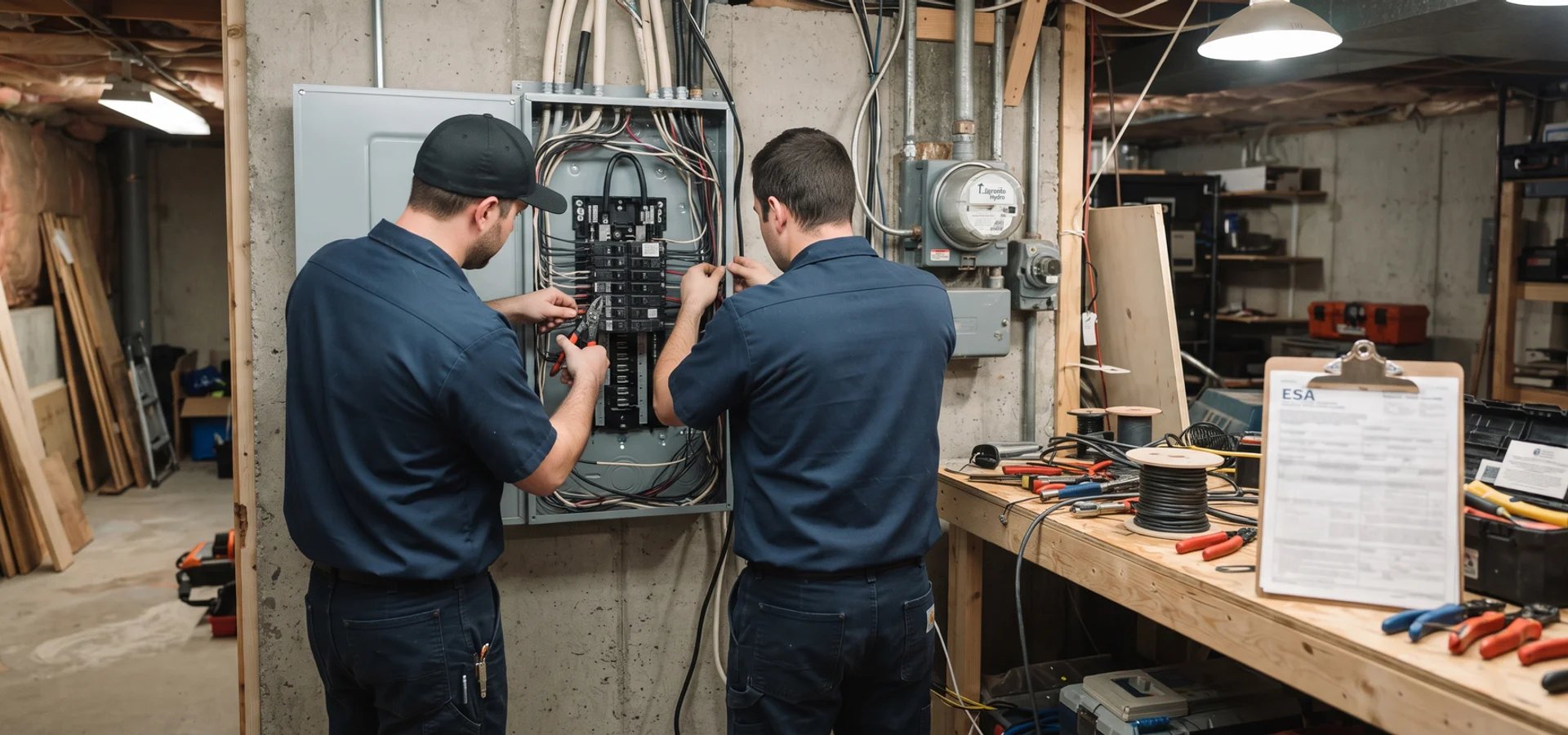
The work itself is ordinary panel work. What makes these jobs different is the deadline and the paperwork. The document that resolves the condition is the ESA Certificate of Inspection, which confirms an Electrical Safety Authority inspector reviewed the installation against the Ontario Electrical Safety Code (OESC). An invoice alone does not close an underwriting file. The certificate does.
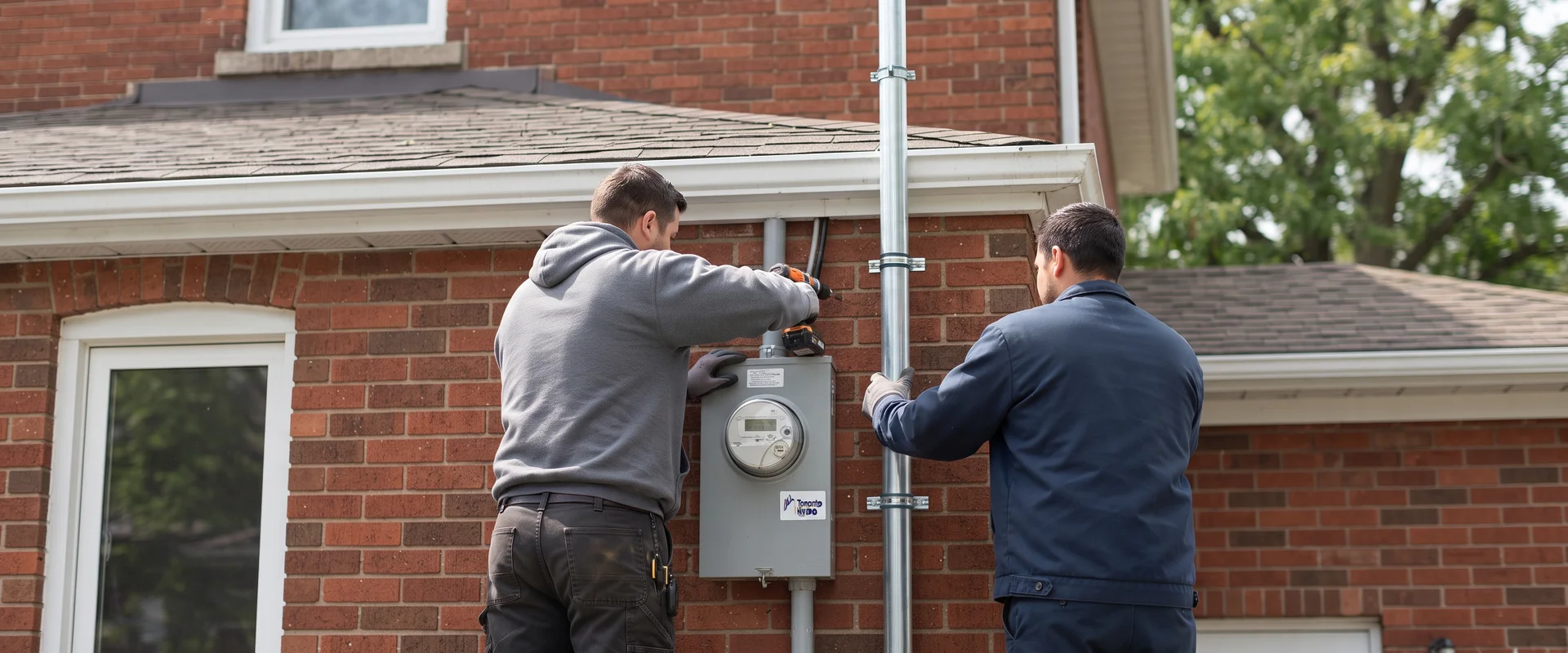
We handle the flagged item end to end: read the letter, scope only what was flagged, file the Notification of Work immediately, book the utility where a service change is involved, complete the work, pass the inspection, and hand back a documentation package you can forward without editing.
For the broader range, see residential electrical panel upgrades.
The Four Flags We See Most
- 60A service. Too small for a modern household and widely treated as uninsurable. The fix is a service upgrade, normally to 200A given the utility work is the same. See 60A to 100A service upgrades.
- Fuse panel. Edison-base or cartridge fuse blocks cannot provide arc-fault or ground-fault protection and invite over-fusing. See fuse box replacement.
- Federal Pacific Stab-Lok or Federal Pioneer. A documented failure-to-trip defect with no repair path. See Federal Pacific Stab-Lok panel replacement.
- Aluminum branch wiring. Oxidation and loosening at terminations creates heat. Normally remediated at the connections rather than replaced. See aluminum wiring panel upgrade.
When the Clock Is Already Running
- A non-renewal notice arrived. These usually carry 30 to 60 days. Tell us the date on the letter at first contact.
- A renewal came back with a condition. Often worded as “subject to replacement of the fuse panel” or similar.
- A home inspection named the panel before closing. The tightest deadlines we work to, and the ones where the inspection slot matters most.
- A new policy application was declined. Common when buying an older Toronto home. The certificate is what allows the application to be reconsidered.
- A premium came back with a surcharge. Sometimes remediation removes the surcharge rather than a coverage condition. Your broker can confirm before you spend.
What Drives the Cost Between $1,800 and $8,000
The scope drives it entirely, and the scope is set by the letter. A same-amperage panel replacement is the cheapest resolution. Aluminum termination remediation sits in the middle and varies with the number of devices involved. A service upgrade to 200A sits at the top because the meter base, service entrance conductors and a utility disconnect all enter the picture.
Where two flags overlap, and they often do on a 1950s Toronto home with a 60A fuse service, we combine them under one permit and one inspection, which costs less than running two separate projects. The ESA permit fee is included, and the utility coordination fee is itemised on its own line.
What You Get at Handoff
Three things. The ESA Certificate of Inspection, which is the document underwriting needs. A written scope description in plain language, stating what was removed, what was installed and what service size the property now has, because some underwriters want the change described as well as certified. And the itemised invoice, matching the accepted quote line for line.
Send all three to your broker or lawyer together. If underwriting comes back with a follow-up question about the installation, we answer it directly rather than leaving you to relay technical detail.
What Home Insurers Require for Panel Upgrades: 100A Minimum, Approved Brands, Documented Grounding
Ontario personal-lines carriers publish specific underwriting rules on residential electrical service. The rules cluster around service size, panel brand, wiring type and documentation.
Service size and panel brand rules
- A minimum 100A breaker service: Intact, Aviva, Economical, Wawanesa, TD Insurance, RSA and Belairdirect all require at least a 100A breaker panel on a modern policy. A 60A fuse service is grounds for non-renewal.
- Approved panel manufacturers: Siemens, Square D by Schneider Electric, Eaton and Cutler-Hammer are accepted. Federal Pacific, Federal Pioneer, Stab-Lok, Zinsco and Pushmatic are named exclusions on almost every carrier.
- Panel age caps on some carriers: older Sylvania or GTE-Sylvania load centres, though not explicitly banned, may trigger an inspection condition when the enclosure is over 40 years old.
- Documented AFCI and GFCI protection: newer policies expect arc-fault protection on bedrooms and living areas and ground-fault protection on kitchens, bathrooms, laundry and exterior circuits.
Wiring and service entrance rules
- No knob-and-tube energised in accessible living space: most Ontario carriers refuse coverage on active K&T wiring, though some will bind with a written remediation plan.
- Aluminum branch-circuit wiring flagged for pigtail retrofit or full rewire: COPALUM crimp connectors, AlumiConn purple caps, or a documented replacement to copper.
- Service entrance in good condition: the meter base, mast, weatherhead and service entrance conductors have to be corrosion-free and correctly sized for the service.
Documentation the insurer wants on file
- ESA Certificate of Inspection issued after the upgrade: names the address, service size and panel.
- A licensed contractor’s invoice describing the work: ECRA/ESA licence number on the letterhead.
- A pre-installation home inspection report, where available: used to close out any listed deficiency.
The ESA Certificate Your Insurer Needs: Notification of Work, Inspection Sequence, and Certificate of Inspection
The Electrical Safety Authority document your insurer accepts is called the Certificate of Inspection, and it is issued only after the sequence below is complete.
Step 1: Notification of Work
- Filed by the licensed contractor before work starts: a Notification of Work names the ECRA/ESA licensee, the property, the scope, and the estimated completion date.
- Turn-around on filing: 24 to 48 hours for a residential panel or service upgrade under ESA Regulation 22/04.
- The permit fee is on your quote: we include the ESA permit fee in the accepted contract price so it is not a surprise on the invoice.
- A copy of the Notification is available on request: most insurers accept the Certificate alone, but a broker occasionally wants the Notification too.
Step 2: On-site inspection
- ESA inspector attends after the panel is installed: the visit reviews bonding, grounding, terminations, conductor sizing, breaker sizing, AFCI and GFCI protection, working-space clearance, and panel labelling.
- Deficiencies get written up on the spot: any listed item is corrected before the Certificate is issued, not after.
- Same-day sign-off is common on straightforward jobs: the inspector’s tablet issues the Certificate electronically once the review passes.
Step 3: Certificate of Inspection
- The Certificate names the address, service size, permit number, and inspection date: this is what your underwriter accepts as proof.
- We hand it to you the same day it is signed: by email and paper copy in the completion package.
- Retention: keep the digital copy in your policy folder and forward it to the broker immediately, because underwriting deadlines often run in 30-day windows.
Panels That Get Flagged at Home Inspection: Federal Pacific, 60A Fuse, Zinsco, Aluminum Branch, No AFCI
Ontario RHI and CAHPI home inspectors flag a specific short list of panels and wiring conditions. Buyers usually see these items in a report before their insurer sees them.
Panels flagged by brand
- Federal Pacific Stab-Lok or Federal Pioneer: named as a listed defect on every Ontario home inspection report, with a recommendation for immediate replacement.
- Zinsco or Sylvania-Zinsco: flagged for aluminum bus corrosion and breaker-to-bus fusion under fault.
- Bulldog Pushmatic: flagged for lack of AFCI and GFCI availability and general obsolescence.
- 60A Cutler-Hammer or Sylvania fuse box: flagged for overfusing risk, insurance exclusion, and continuous-load capacity.
Wiring conditions flagged in the report
- Aluminum branch-circuit wiring in general-purpose circuits: typically homes built between 1965 and 1978, wire marked “Alcan” or “AA-8000”.
- Active knob-and-tube energised in living space: most common in Toronto homes built before 1950.
- Reversed polarity, open ground, or bootleg ground receptacles: flagged as a general electrical safety issue, not always tied to the panel.
- Missing AFCI or GFCI protection on required circuits: flagged more often in reports written for buyers of newer homes.
What closing the flag looks like
- A written scope from a licensed contractor: matched to the specific item in the inspection report.
- ESA Certificate of Inspection on the finished work: the paperwork the buyer’s insurer and lender both accept.
- The invoice describing the scope in plain language: so the buyer’s file has a self-contained record for the next transaction.